
When Indonesia held the 2018 Asian Games, the country also successfully demonstrated 5G services. Not wanting to stop the success story, the government has again set its ambition to roll out the service in 13 locations until 2024.
There are 13 locations that will be able to enjoy the deployment of 5G wireless infrastructure, consisting of six provincial capitals on the island of Java, five super-priority tourist destinations, the State Capital (IKN), and one manufacturing industry. If it is true that it can be realized, it will be good news and a record of the achievements of a nation. This means that Indonesia will also be listed as a pioneer country in the use of 5G.
Currently, according to data from the International Telecommunication Union (ITU), there are 34 countries that already operate this type of fifth-generation cellular technology as of April 2020. The plan for deploying 5G in 13 locations is determined based on the Regulation of the Minister of Communication and Information Number 2/2021 concerning the Strategic Plan of the Ministry of Communications and Informatics. .
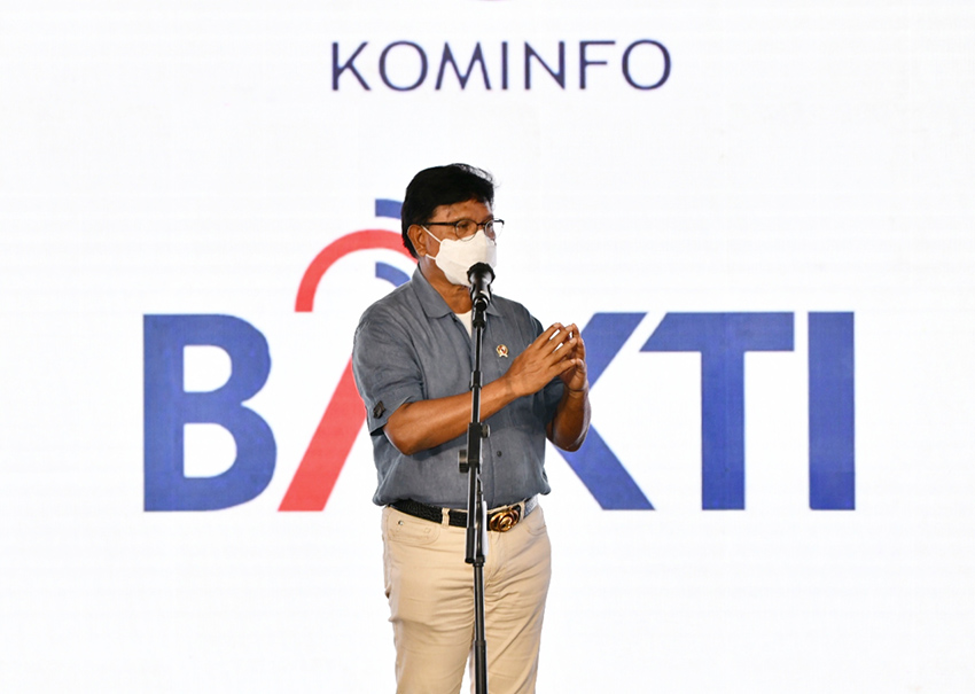
The government will focus on facilitating the deployment of infrastructure and 5G networks in 13 locations until 2024. It was the Minister of Communication and Information (Menkominfo) Johnny G Plate who explained this as stated in the recently promulgated Permenkominfo.
“The performance will be carried out in stages and in the early stages it will be limited to a number of points. From now on, operators need to start calculating monetization from investment so they can choose areas with a high data traffic profile, or those that are close to reaching its maximum capacity with a 4G network,” he said in a press statement, Thursday (25/03/2021).
In addition, Minister Johnny said, the implementation of the early stages of the 5G network is aligned with the government’s steps in preparing additional rules regarding the management of the 5G network. This additional regulation contains five aspects, namely, regulation, radio frequency spectrum, business model, infrastructure, and ecosystem, devices, and digital talent.
This year, the Kominfo has prepared a national 5G roadmap. The following year, preparing regulations or policies, as well as accelerating 5G. In 2023, set up 11 locations and a year later to a total of 13 locations.
Biggest Difference
Before going any further, of course, it is necessary to know what type of 5G service is? Currently, many of us are already enjoying 4G services. Well, the biggest difference between 4G and 5G is peak capacity and latency.
For example, the peak capacity of the 5G service sector is in gbps (gigabytes per second) compared to 4G in mbps (megabits per second). When we use 5G-based services, consumers will experience speeds that are more than 100 times faster than before to surf the internet, access HD videos, and so on.
In addition, latency, or the time that elapses from information being sent from the device to being used by the recipient, is greatly reduced on 5G networks, enabling faster upload and download speeds. Another big difference between 4G and 5G is the size of the bandwidth.
In the context of the plan, Kominfo focuses on facilitating and assisting the deployment of infrastructure and 5G networks in 13 cities until 2024, with details of six provincial capital cities on Java Island, five super-priority tourist destinations, the State Capital (IKN), and one manufacturing industry in the early stages of development. early implementation of 5G.
It is stated in the Minister of Communication and Information Technology Regulation number 2/2021, the selection of the location of the six provincial capital cities on Java Island as a pilot project in the early stages of 5G implementation, because the six locations are considered feasible both in terms of market potential and infrastructure support. Kominfo hopes that after deploying 5G in 13 locations, in the not too distant future, 5G services will be expanded according to demand growth in other locations.
The plan to issue a legal umbrella for implementing the 5th generation was also welcomed by business people. According to operators, the plan is a breath of fresh air for operators to accelerate the construction of optical fiber so that the 5G transition doesn’t take long.
Please note, currently there are very limited 5G devices available. Not only that, there is still homework that needs to be completed before moving on to deploying 5G infrastructure. For example, the need for allocation of a large number of frequency spectrum, at least 100 MHz.
Meanwhile, other business people commented that 5G development in Indonesia will depend a lot on the development of the global ecosystem. He explained that the frequency band used will be in line with the conditions of international equipment that have supported certain frequencies. The implementation of national 5G, he added, would follow many examples of 5G implementation at the global level.
It is undeniable that now many countries have implemented 5G networks. Unfortunately, the results of the performance have not shown optimal benefits for the growth of the telecommunications operator’s business.
Regardless Of all that, Indonesia, like other countries, also wants to be in line as a pioneer country for 5G services. Success or failure also depends on the support of all parties so that a strong ecosystem is built and provides extraordinary economic benefits. Welcome to 5G in Indonesia.
https://www.kominfo.go.id/content/detail/33717/segera-hadir-layanan-5g/0/artikel