
Jakarta, Kominfo – Minister of Communication and Information Johnny G Plate said the 2.3 GHz frequency band is intended to complement the needs of 4G technology and initiate the implementation of the fifth generation or 5G technology. According to him, the Ministry of Communications and Informatics is in the middle of fixing the governance of the frequency spectrum, analog switch off (ASO), infrastructure distribution, and strengthening digital ecosystem regulations.
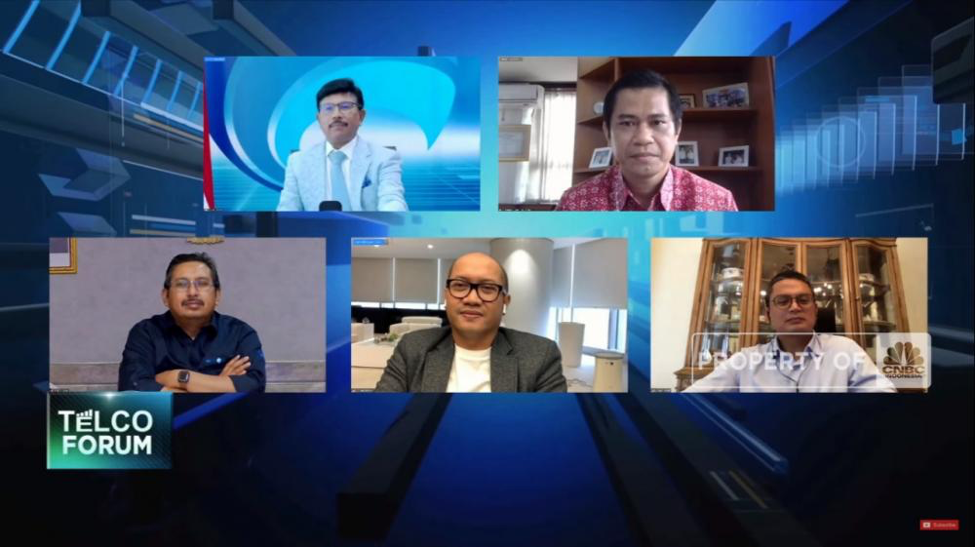
“I want to explain that the 2.3 GHz frequency is available to meet telecommunication needs, specifically to complement 4G needs and start the 5G initial showcase,” he said at the CNBC Indonesia Telco Forum Online Seminar 2021: 5G The Future of Indonesian Communications from Jakarta, Wednesday (28/04). /2021).
In order to meet the need for 5G frequencies, Minister Johnny stated that the Ministry of Communications and Informatics is currently farming and refarming spectrum at various levels. “5G is not only a human to machine activity but moving from machine to machine on a different spectrum level and the utilization of the Internet of Things (IoT) is very important in the future,” he explained.
According to the Minister of Communication and Information, Indonesia itself has conducted 5G trials 12 times, so it is not left behind for development. “So the development of 5G is still in the early stages,” he added.
Minister Johnny G said the reason for the government to carry out digital transformation was so that all people could benefit from the development of the digital world. “To realize this plan, the Ministry of Communication and Information collaborates with digital industry players,” he said.
The Minister of Communication and Information explained the need for frequency spectrum management to encourage the latest 5G technology, one way is by refarming spectrum to increase efficiency of use. “The frequency spectrum is like a toll road, it is impossible to build if there is no land bank. There must be land acquisition, even those that already have a certificate. We need to do spectrum farming and refarming,” he said.
Regarding ASO, the efficiency of digitizing national broadcasting has entered the socialization stage and is ready to be implemented in November 2022. Next, the distribution of telecommunications infrastructure development, one of which is the provision of 4G services throughout Indonesia in 2022.
Meanwhile, regarding the strengthening of regulations in the digital ecosystem sector, the government has made derivative rules from the Job Creation Act in Government Regulation (PM) Number 40 regarding postelsiar.
At the same forum, the Deputy Director of Sarana Menara Nusantara, Adam Gifari, said that Indonesia has a very large infrastructure need in the telecommunications sector. “There are some things that are not in harmony, such as during implementation, there are differences in perceptions between the central and regional governments. There are still many things that need to be explored, such as permits, commitments, and regulations. “We see this as a process that must be continuous,” he explained. Therefore, Adam Gifari hopes that there will be a mechanism between the central government, operators and stakeholders. “Otherwise, this could be problematic during implementation,” he said.
Meanwhile, President Director of Telkomsel Setyanto Hantoro welcomed the government’s decision, where the selection of users of the 2.3 GHz frequency band aims to increase the capacity of cellular mobile networks, improve service quality to the maximum, and encourage acceleration of deployment of Information and Communication Technology (ICT) infrastructure with technology. 5G.
“As stated by the Minister of Communication and Information, 2.3 GHz is a potential spectrum band for 5G, although it is not the only one. Telkomsel will be the leader and provide 5G services for the community,” he hoped.
The President Director of Telkomsel emphasized the obligation of providers to pursue technological developments, so that the community can benefit as much as possible. When 5G is implemented, the end user community and industry can benefit by increasing productivity, so there is economic growth.
“This implementation must be sustainable for the community and operators, not only one sector but the ecosystem must be prepared,” he added.